Why stations close
Stations close for reasons that range from the ordinary to the geopolitical. Some were built too close to neighbours as lines were extended; others lost traffic to buses and cars; some were bypassed by new routes; a few were cut off by borders or war. The reason matters, because it shapes what survives. A station closed for low use is often left largely intact, while one closed for rebuilding may retain only fragments.
Reading the platform
- Length. A platform far longer than any train that later called there tells of excursion or freight traffic expected by its builders.
- Lettering. On London Underground, Edward Johnston's typeface, introduced in 1916, helps distinguish later signage from earlier painted names.
- Tile schemes. Colour bands and patterns were often designed per station to help passengers recognise their stop.
- Canopies and brackets. Cast-iron brackets may carry foundry names and dates.
- Room layouts. Separate waiting rooms, booking halls and parcels offices reflect class divisions and freight handling.
Documented stations and their later lives
Canfranc International Station, Spain
Opened in 1928 on the line between Spain and France through the Pyrenees, Canfranc was built on a monumental scale. Cross-border service ended in 1970 after a derailment destroyed a bridge on the French side. The main building was restored and reopened as a hotel in 2023, while local trains still serve Canfranc from the Spanish side.
Michigan Central Station, Detroit
Designed by Warren & Wetmore with Reed & Stem, the station opened in 1913 and closed in 1988. For decades it was photographed as a symbol of decline. Ford Motor Company bought it in 2018 and reopened it in 2024 after restoration. Earlier photographs now document a phase of the building's life rather than its end.
Aldwych, London
Opened as Strand in 1907 and renamed Aldwych in 1915, the station served a short branch and closed in 1994. It now opens for guided tours run by the London Transport Museum's Hidden London programme and is used for filming. Those tours are the lawful route in.
City Hall, New York
The ornate terminal of New York's first subway line opened in 1904 and closed to passengers in 1945, partly because its curved platform could not accommodate longer trains. The New York Transit Museum has run occasional member tours.
Berlin's ghost stations
During Berlin's division, several stations on West Berlin lines passing under East Berlin were closed and guarded, and trains ran through without stopping. They reopened after 1989. Exhibitions in the reopened stations explain this history.
Verified history and inference
Opening and closure dates are recorded in railway company minutes, timetables and parliamentary or municipal records. Stories about secret uses, hidden bunkers or abandoned trains need sources. Where a wartime use is documented, cite it; where it is rumoured, say so.
Live railways are not abandoned places. Many disused stations sit beside or beneath operational lines with live rails, overhead wires and fast trains. Entering track areas is illegal in most countries and can be fatal. Photograph from public platforms, footbridges or official tours only.
Photographing stations responsibly
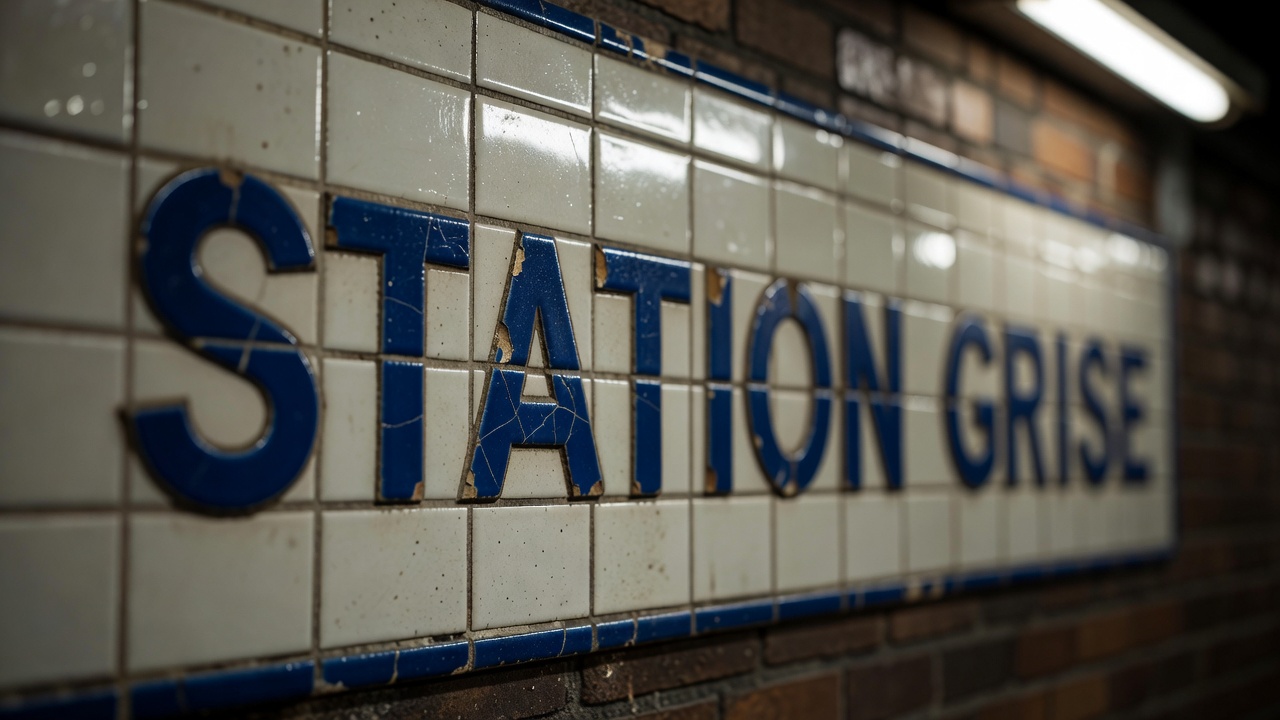
Use shallow focus to isolate lettering and fittings, and a wider frame from public viewpoints to show the station's relationship to the line and town. Note the date, the viewpoint and any permission held. If a heritage railway or museum owns the site, ask about their photography rules; many welcome documentation if you share copies.